


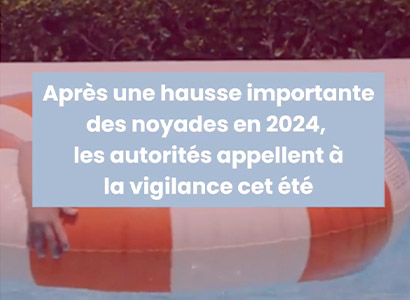
How long does it take for an accident to happen near water? Far less time than you'd think. Every summer, regional news outlets report the same scenario: a child left unsupervised for just a moment, sometimes only a few metres from an adult distracted by something else — a phone, a conversation, an everyday task.
A problem that isn't going away
Season after season, published analyses point to the same finding: a lack of continuous supervision and momentary carelessness remain major factors in drowning accidents, whether in a private pool or in open water. It's rarely a question of parental negligence, but often an overconfidence in a vigilance we assume is already in place.
The trap of "false security"
Being present by a pool and being truly vigilant are two different things. You can have your eyes turned towards the water without actually being ready to react within seconds — which is exactly the window you have in a silent drowning. This illusion of safety is what makes some preventable accidents so hard to accept afterwards.
Setting up genuinely active supervision
- One clearly designated "water watcher" at a time — never a responsibility diluted across several people.
- Zero screens while supervising: phone put away, conversation paused.
- Position yourself at water level if possible, to spot anything unusual immediately.
- Never rely solely on armbands or floats, which give a false sense of security to both child and adult.
- Set a simple rule: no one goes near the water without an adult being told first.
Giving the child the means to react while the adult steps in
No supervision is 100% effective. That's why it's essential to give children the basics of water confidence — floating, rolling over, staying calm — to buy precious seconds after an accidental fall. That's exactly the goal of the Plouf Method, designed to support families day to day, without replacing adult vigilance.
What to remember
Active supervision and water confidence aren't in competition — they complement each other. One reduces the chance an accident happens; the other limits its consequences if it does.